Foley Catheters - Balloon and Indwelling Catheters
Foley Catheters, or balloon catheters, are flexible tubes inserted into the urethra by medical professionals to drain urine from the bladder when a patient cannot independently do so; The self-retaining Foley utilizes a small balloon inflated with solution to comfortably hold the catheter in place. Allegromedical.com offers an assortment of silicone, latex, and rubber Foley catheters from industry-leading brands like BARD, Coloplast, and Rochester Medical at the best prices guaranteed. For peace of mind and further savings, set up routine shipping with our convenient Allegro Autoship program.
UNDERSTANDING FOLEY CATHETERS
What is a Foley Catheter?
The Foley self-retaining balloon catheter, designed by Dr. Frederic Foley in 1929, is a flexible tube inserted into the urethra to drain urine from the bladder when a patient is unable to do so independently. Introduced to the market in 1935 by the C.R. Bard Company, the Foley remains the most commonly used indwelling urinary catheter in the world today.
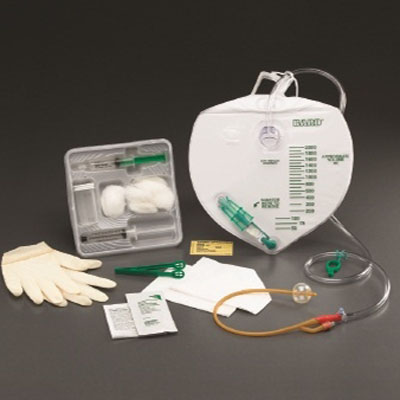
Foley indwelling catheters are prescribed by a physician and inserted by healthcare professionals in a clinical setting. The tubing consists of two separate channels, one to drain urine away from the bladder and the other to inflate the balloon with sterile water after insertion to hold the catheter in place. On average, Foley catheters are routinely cared for every 30 days and fully changed every 3 months, absent any complications.
Relevant Terminology*
Catheter - a tubular, flexible instrument, passed through body channels for withdrawal of fluids from (or introduction of fluids into) a body cavity.
Urinary Catheterization - the insertion of a blunt-ended, rubber or plastic tube into a patient's bladder through the urethra used as a conduit to drain urine from the bladder into an attached bag or container.
Indwelling Catheter - A hollow tube left implanted in a body canal or organ, especially the bladder, to promote drainage.
*Sourced from https://medical-dictionary.thefreedictionary.com/
TYPES OF FOLEY CATHETERS
2-Way Foley Catheters
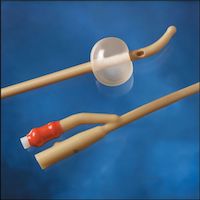
An indwelling catheter with two ports - one to drain urine away from the bladder and into a drainage bag and the other for inflating the Foley balloon.
3-Way Foley Catheters
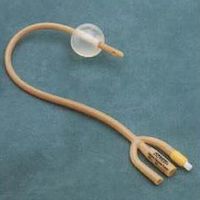
An indwelling catheter with three ports - one for urine drainage, one for Foley balloon inflation and a third port for bladder irrigation to prevent or manage blood clots.
Silicone Foley Catheters
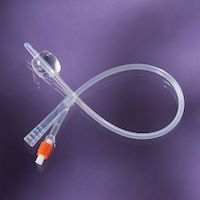
An ideal choice for long-term catheterization, all-silicone Foley catheters cause less friction resulting in fewer injuries and less irritation to the urethra. They are also the preferred option for patients with latex allergies.
Coated Foley Catheters
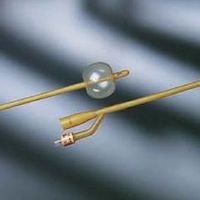
Coated catheters are made of latex and covered with various materials for different purposes. Silicone Elastomer-Coated Latex Foley Catheters ease insertion; and Silver-Coated Foley Catheters, Hydrogel-Coated Foley Catheters or a combination of the two coatings are clinically proven to reduce urinary tract infections.
Foley Tubes
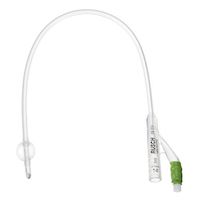
Flexible silicone or latex tubing drains urine from bladder. Catheter extension tubes are available for attachment to leg bags or bedside drainage bags.
Foley Balloons
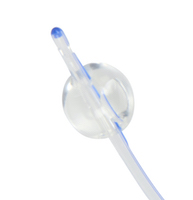
Once inserted, a small balloon at the tip of the Foley is inflated with sterile water to hold the catheter in place. It can easily be deflated for removal.
Catheter Ports
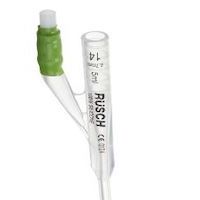
Two-way Foley catheters have two ports, one for drainage and the other to inflate the balloon. Three-way Foleys have a third port for bladder irrigation, primarily used to flush out blood and clots with the use of a syringe.
Urinary Drainage Bags
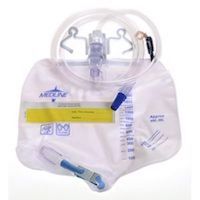
Drainage bags attach to the tubing to collect urine. Made of durable plastic, leg bags and belly bags usually have a fabric backing for comfort against the skin. Other styles include bedside and night-time bags available in multiple sizes.
BASIC FOLEY CATHETER PARTS
Foley Catheter Indications
Depending on the cause of urinary retention or incontinence, indwelling catheterization may be prescribed by a qualified healthcare professional. Foley catheters may be indicated in the following instances:
Common Short-Term Uses
- Acute Urinary Retention as a result of temporary nerve injury or medications like anesthesia, paralytics, or opioids;
- Acute Bladder Outlet Obstruction from an enlarged prostate, urethral stricture, blood clots, or pelvic prolapse;
- Accurate monitoring of urine output in critically ill or surgical patients;
- Following gynecological or urological surgery;
- During gynecological, urological, and any prolonged surgical procedure, or when large amounts of diuretics or infusions will be used in the procedure.
Common Long-Term Uses
- Chronic urethral obstruction due to congenital defects or injury where intermittent catheterization has stopped working or is not possible;
- To improve comfort for patients with irreversible or chronic medical conditions like quadriplegia, metastatic disease, coma, mental impairment, or end of life care;
- For incontinence care when a caregiver cannot be present.
*Information sourced from CatheterOut.org and UFHealth.org
Catheter-Associated Urinary Tract Infections (CAUTI)
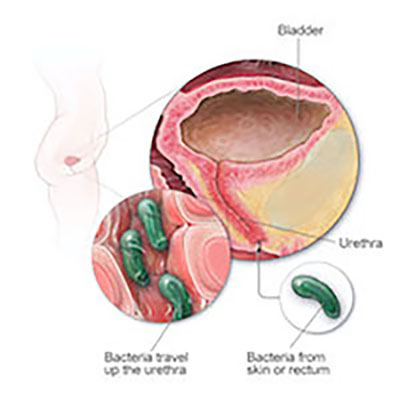
A urinary tract infection is an infection of the bladder or kidneys. Catheter-associated urinary tract infections, or CAUTIs, occur when bacteria enters the bladder by traveling along catheter tube. The longer an indwelling catheter is in place, the higher the risk of a CAUTI. Urinary tract infections can be painful and potentially life-threatening, but are treatable with antibiotics when tended to in a timely manner. To reduce the risk of contracting an infection, diligent commitment to proper hygiene during insertion and daily cleansing is imperative.
Possible Symptoms of a UTI include but are not limited to:
- Burning sensation or pain in the lower abdomen or around the groin;
- Burning sensation while urinating;
- High fever and/or chills;
- Mental Confusion;
- Cloudy or bloody urine with a strong odor;
- Strong, frequent urge to urinate.
Contact your healthcare professional immediately if you believe you have a UTI.